
Description
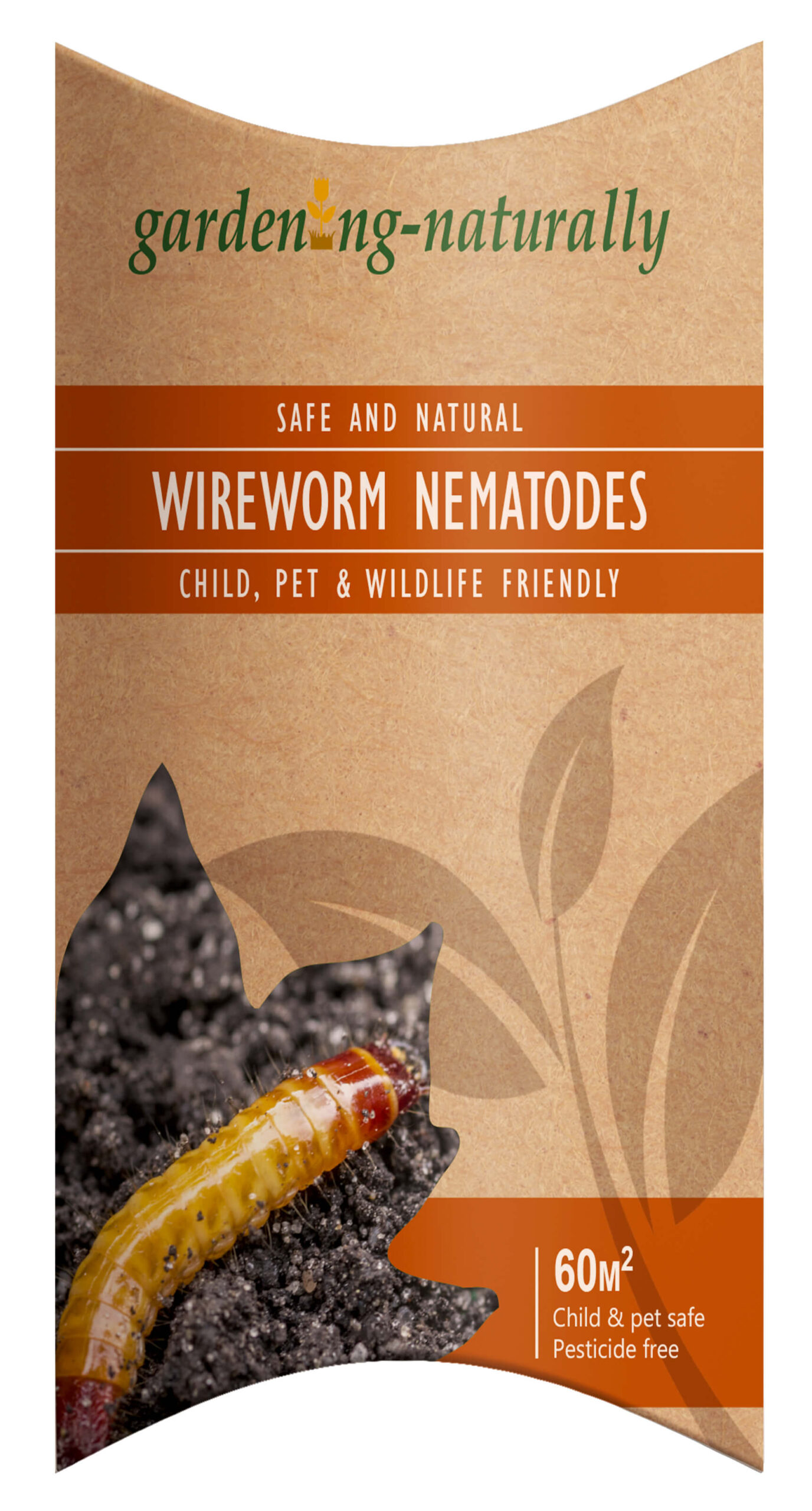
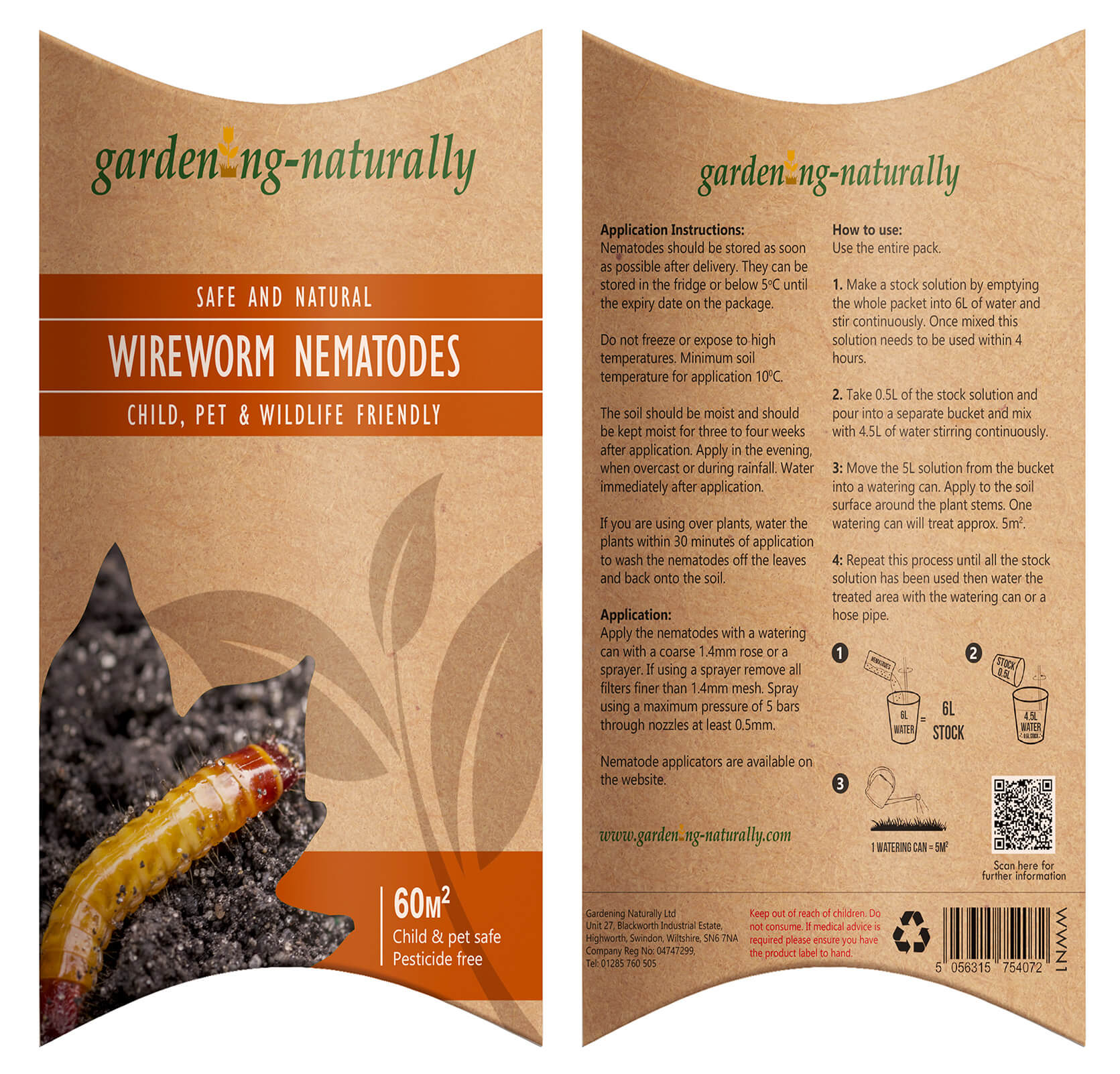
Wireworm Nematodes – Natural Biological Wireworm Control
Wireworm nematodes contain a beneficial blend of microscopic organisms, Steinernema feltiae and Steinernema carpocapsae, designed to target wireworms in the soil. Wireworms are the larvae of click beetles and are a common garden pest, particularly affecting potatoes, carrots, sweetcorn and peas. These yellow to brown, slender larvae typically measure between 1 and 4cm in length and feed on seeds, roots and underground plant material. Wireworm feeding can stunt plant growth, reduce crop yields and leave vegetables damaged by unsightly holes and tunnels, making them less appealing to harvest and eat.
When to Apply Wireworm Nematodes
Female click beetles lay their eggs in the soil between late April and late July. The eggs typically hatch after approximately one month, releasing young wireworm larvae into the soil. For best results, begin applying nematodes from May onwards, ideally at least five days before planting susceptible vegetables. Further applications throughout the summer can help target newly hatched larvae as they emerge. Wireworm larvae can remain in the soil for three to five years and may burrow quite deeply, making ongoing control important where infestations are established.
How Do I Identify Wireworms?
Wireworms are easily recognised by their distinctive appearance. They are long, thin and cylindrical in shape and are shiny, yellowish-brown to golden-brown in colour. They have a noticeably darker head and usually between 1 and 4cm long. They live in the soil and feed on seeds, seedlings, roots and the base of plant stems. Potatoes are particularly vulnerable, with larvae tunnelling into the tubers and leaving characteristic holes and channels.
What Are the Signs of a Wireworm Infestation?
A wireworm infestation can cause considerable damage to vegetable crops, particularly when large numbers of larvae are present. Look out for the following signs:
- Poor or stunted plant growth.
- Seedlings that wilt or die without an obvious cause.
- Damage to roots and the base of plant stems.
- Holes and tunnels in potatoes, carrots and other root vegetables.
- Reduced crop yields and damaged produce.
Large populations can seriously weaken plants and, in some cases, cause them to die.
Application Tips
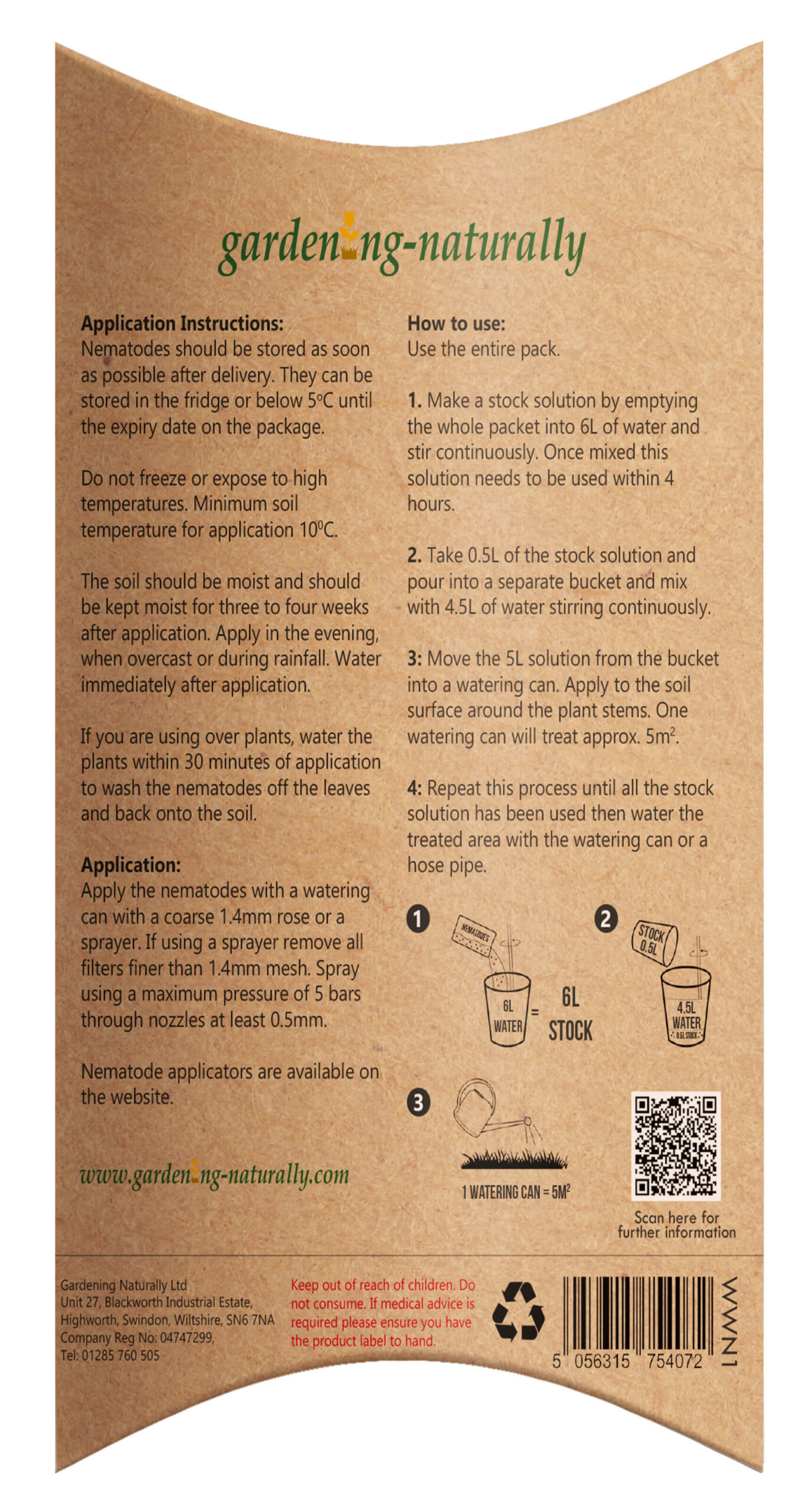
After applying the nematode solution, water the plants within 30 minutes to wash any nematodes from the leaves and help direct them back into the soil, where the wireworm larvae are found.
Ideal Conditions and Soil Temperature
Nematodes are living organisms and are sensitive to extreme temperatures. Avoid exposing the product to freezing conditions or excessive heat during storage, preparation and application. For best results, follow the application instructions supplied with the product and ensure the soil conditions are suitable.
Storage and Shelf Life
Wireworm nematodes are a live, perishable product. On delivery, store them in the refrigerator at a temperature below 5°C until required. The product has an approximate shelf life of two weeks. Always check the expiry date supplied and use the nematodes before this date to ensure they remain viable.
Delivery:
Within 2-3 working days.
This is a live, perishable product with an approximate shelf life of two weeks. Store in the refrigerator until ready to use.
Due to their perishable status, these items are exempt from our return/refund policy.